


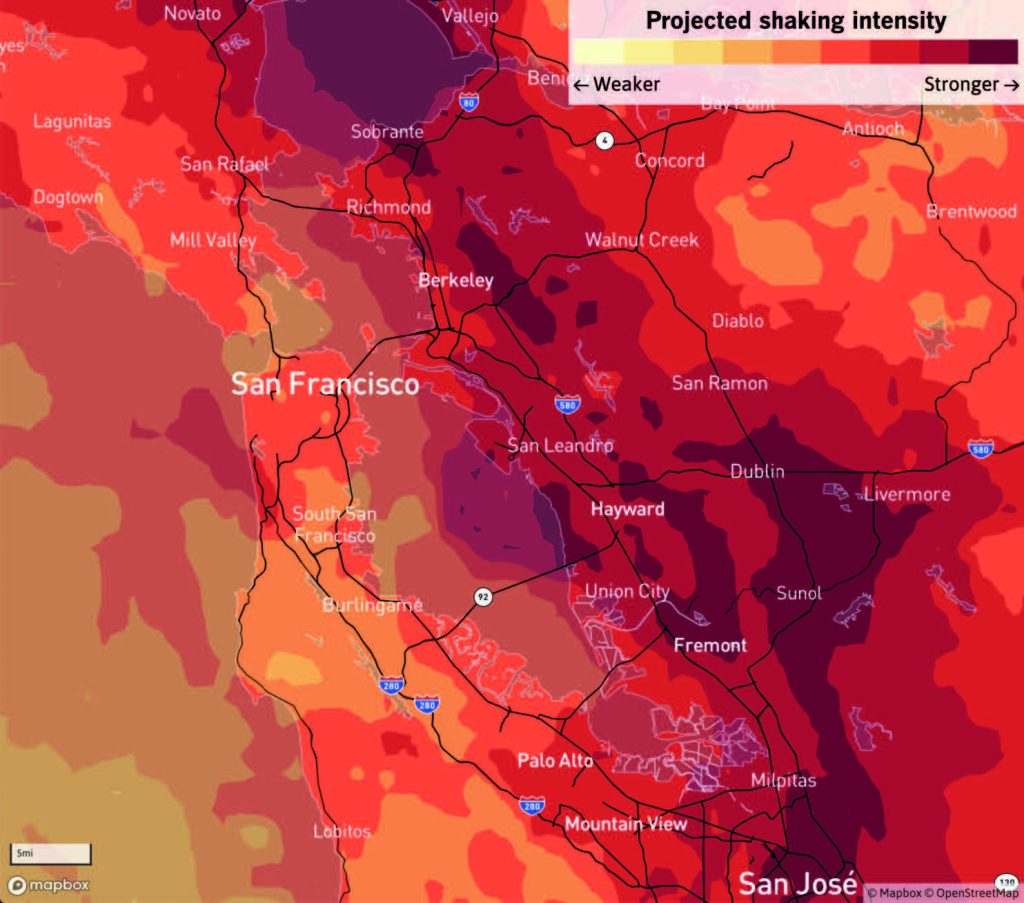
California’s Earthquake Risk
____________ the “Big One”
Back in the , scientists completed a ten-year survey on the earthquake risk in California; and they came up with an alarming prediction. The next “Big One”, that massive earthquake that Californians know is coming, could well strike some time after the year . And Californians well know that this prediction could be right. California often experiences earthquakes, and a “big one” is sure to hit the state again sometime soon. Larry Wood, who lives on top of the “Hayward fault”, knows what it is like to be in an earthquake.
California is known all over the world for its , its , and its , its glamour and its . But it is known too as “ Country ”
— a truly vulnerable region where big devastating quakes have occurred in the past and could happen again. It is unlikely that a disaster on the scale of recent disasters in Italy or Japan could occur in California; California has learnt from its past disasters, and most buildings are designed to withstand major quakes. , Cali- fornians are worried. When will the next big quake strike the state, and where will all the shaking and crumbling and rocking begin?
Nobody knows for sure, but at all times California is on the alert. There could be an earthquake in California today. , the earth is permanently mon- itored with high-tech seismographs situated in universities and government research stations; they are constantly watched by highly-trained employees and volunteers from the California Office of Emergency Services; and students in every school receive training in what to do in the event of* an earthquake.

Working at Menlo Park, near Stanford University, in the middle of “Earthquake Country”, scientists from the United States Geological Survey are always monitoring and studying fault systems, and trying to predict where earthquakes are going to take place next.
Back in , a team of USGS scientists completed a ten-year survey on “earth- quake possibilities”, and came up with the conclusion that there’s going to be a lot of shaking in the years ahead. In particular, they predicted a % possibility of an exceptionally big quake of 8.3 sometime before 2018, somewhere along the San Andreas or Hayward faults.
In the two centuries from 1812 to 2012, California has suffered dozens of earthquakes. The
last damaging earthquake was the 1994 quake in the Los Angeles
area, that registered 6.7 on the Richter scale, and did up to $40 billion worth of damage. A much stronger quake, of 7.2 on the Richter scale, struck Baja California (Mexico) in 2010, doing over a billion dollars’ worth of damage in this far area.
Since 1812, California has experienced 15 major earthquakes of a of 7.0 or larger. Two of these were the great quake of 1857, with an estimated magnitude of 8.3, and the great earth-quake of 1906, which nearly levelled the port city of San Fran- cisco and had a magnitude of 8.25.
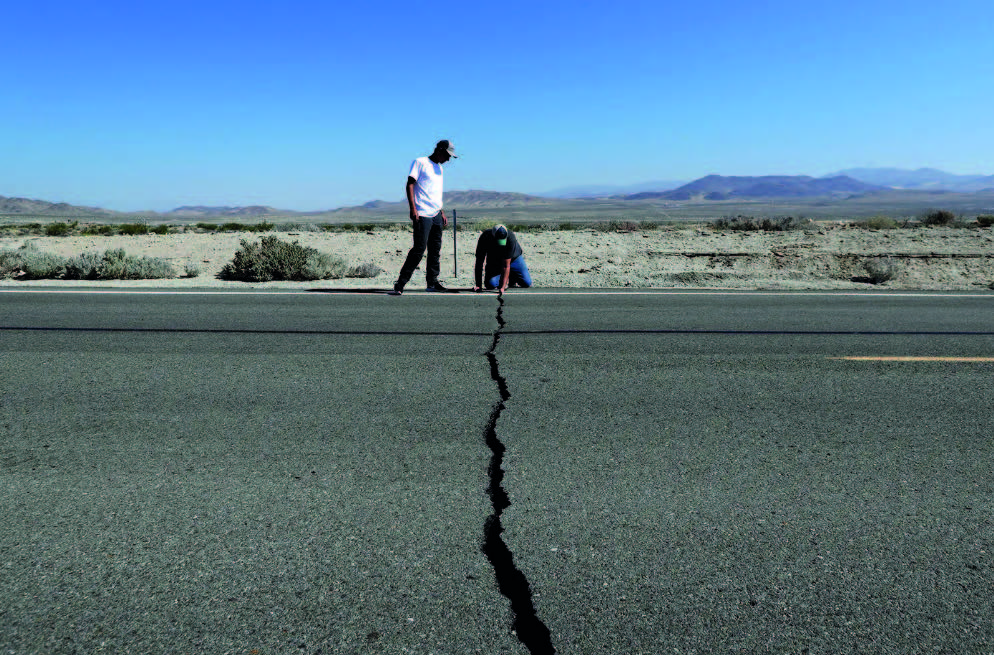
Responsibility for California’s earthquakes lies in the fact that the state sits atop the famous and terrifying San Andreas Fault. This fault rocks and quakes often and unex- pectedly as the earth’s tectonic plates shift along fault lines that run miles from the border to the north California coast. It is almost unbelievable that more than 20 million people should choose to live along this fault; but because their state has prosperity, an ideal climate, and a wonderful ambiance, Californians take a laissez-faire attitude to the potential danger.
Living in the hills above the Hayward Fault, I know all about the danger. Like many Cali- fornians, I buy costly earthquake insurance for my home. If I walk along certain streets in the town of Hayward, I can see how the earth creeps and shifts. In some places, the town looks as if the architects and builders made big mistakes in , be- cause the buildings are out of kilter.
Actually, what has happened is that the streets have cracked and shifted, so that curbs no longer meet. Houses have shifted, so that walls are . Buildings have interior and exterior cracks that can’t be prevented, because the slowly shifting earth causes an inexorable movement in foundations, walls and streets! Geologists believe that displacements along this fault have been occurring for 15-20 million years. The drift can be measured — in the present decades — as a displacement of two inches per year, on average. It doesn’t take an expert to figure out what moving part of a building two inches a year will do to that structure. During the destructive earthquake, in some places the earth moved as much as 21 feet!
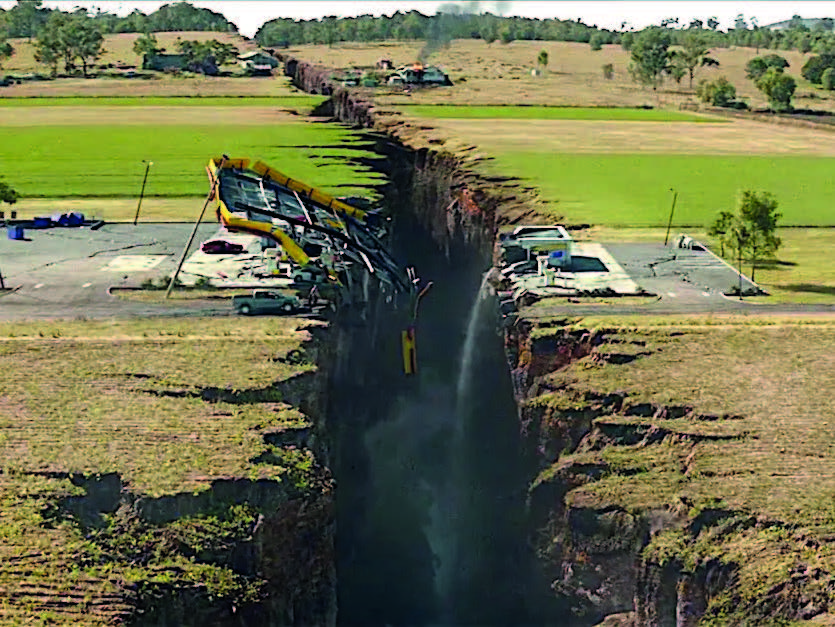
Scientists now know that major earthquakes occur at about -year intervals along the San Andreas fault; but in the future, they will probably not happen unan- nounced. Scientists can now better predict when a quake is coming, by foreshocks and other techniques discovered in the studies they are constantly undertaking, so Califor- nians can normally go to bed at night without worrying whether the house will fall down around them while they are sleeping.
Still, with or without a warning, the next Big One, when it comes, will still do damage. It’s something that we Californians just live with.
WORDS:
-survey: study -prediction: talking about the future -strike: hit, happen -vulnerable: at risk -unlikely: improbable
-withstand: resist -monitored: watched -seismograph: apparatus that detects movements in the ground
-training: instruction -downtown: central -shift: move -to creep: move slowly -out of kilter: not in a straight line
-curb: edge of the road -inexorable: unstoppable, inevitable -drift: movement -two inches: about 5 cm.